Filibuster


- General History
- 1 min
By Crusader1307
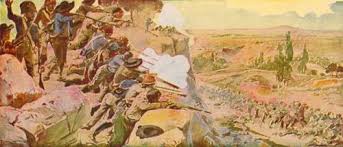
Unlike teh Political Term - ''Filibuster'' can also be applied to an irregular Military Force, often confused with Mercenaries (or related ''Paid Troops''), Spanish in origins - Filibusters are actually an American application. In the mid-19th-Century, many Filibisters were private Soldiers who often went into South American Countries to ''stir up'' a poorer population and direct them against their Government. The goal was to ''change'' the Government and political mood of a Country. Mercenaries were not paid (like Mercenaries), and came with their own equipment - often relying on a sympathetic population for food and related supplies.
A War developed as a result of American Filibusters in 1855. In this ''affair'', not only American - but as many as (15) South American Countries, fought with the aid of The Population of Nicaragua - to oust what was seen as a Dictatorship. The ultimate goal was to impant a ''Democratic'' Nation (perhaps more sympathetic to The United States). Over 5,000 American Filibusters were engaged against close to 11,000 ''Allied'' Central and South American Forces (who, by their own governments, had ''claims''). American Filibusters had sought US ''aid'' and at one point - was close to achieving it.
The strife in The United States (Slavery and Pro-Southern ferment), caused an unofficial stop in such help. The American Filibusters (with over 1,000 casualties) had to withdraw in 1856 due overwhelming resources by Combined Government Forces. The Filibuster Leader, William Walker - escaped and surrendered to The US Navy. Despite requests for extradition - Walker was taken back to The US - a Hero. The term ''Filibuster'' is also associated with the more Modern term ''Proxy War''. Some examples existed in several Caribbean Nations (again by US agitators) - in the early 20th Century.