Food - Stronghold 3 Building


Granary
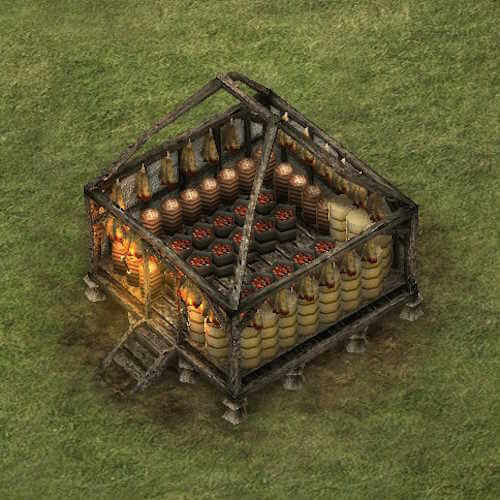
Cost: N/A
This essential structure is where your food is stored. Only one granary can be built, and it holds an infinite quantity of food. By looking at your granary you can see the rough amount of food you have stored, but clicking on the granary will bring up a panel showing the actual amounts. Food stored in the granary is used to feed your peasants. How much food you feed your peasants is up to you. Using the popularity panel you can change the food rations handed out to your population. Changes to your rationing directly affect your popularity and the speed with which food is taken from your granary. If you feed your people more than one food type you will earn a popularity bonus. The granary also allows you to buy and sell food, without the need for a market.
Apple Farm
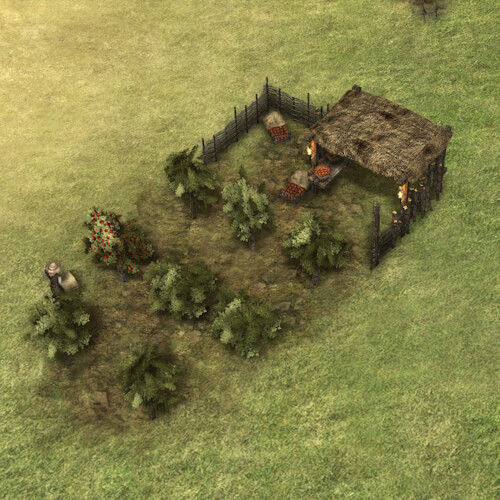
Cost: 20 wood
Produces apples which are delivered to the granary and used to feed the population.
Dairy Farm
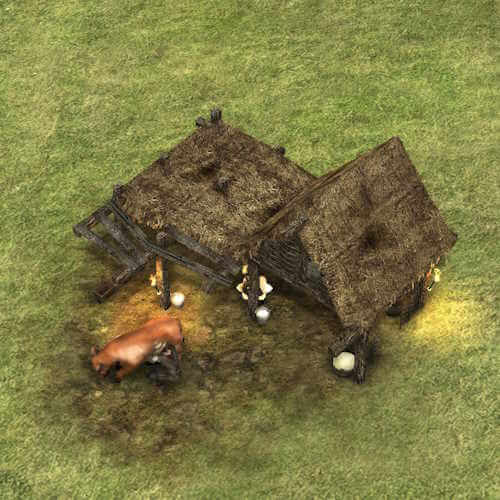
Cost: 15 wood
Produces cheese which is delivered to the granary and used to feed the population.
Pig Farm
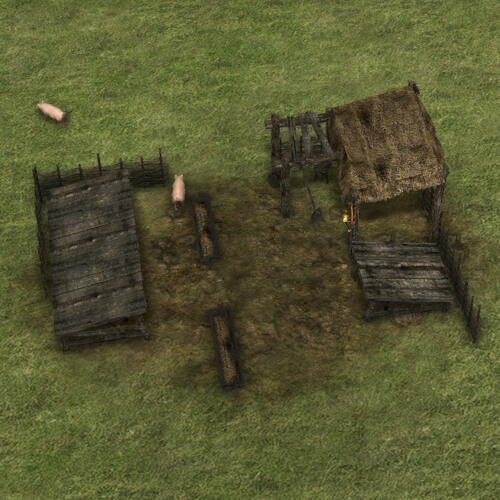
Cost: 100 wood
Produces pigs which are delivered to the granary and used to feed the population.
Wheat Farm
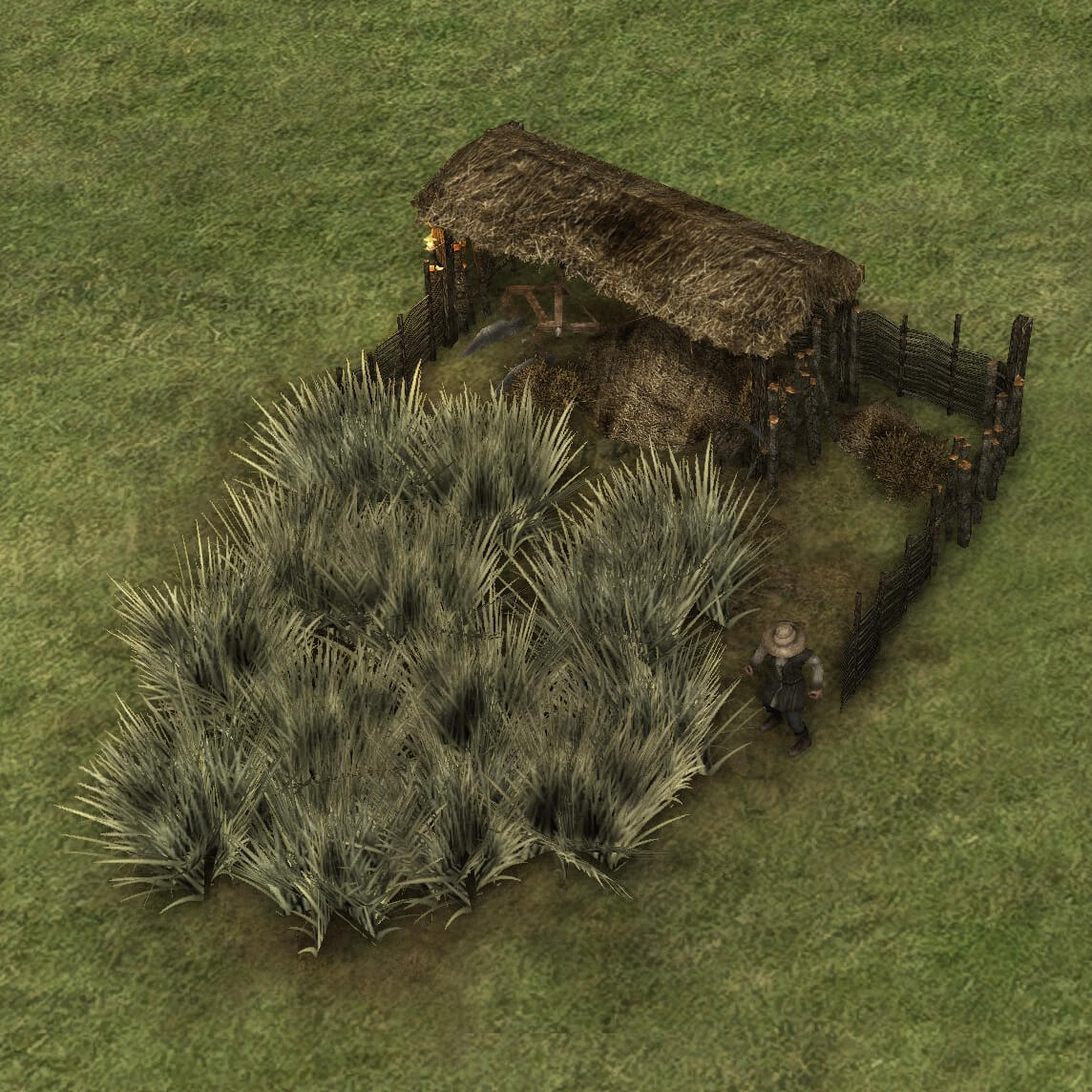
Cost: 10 wood
Produces wheat which is delivered to the stockpile and used in the mill to create flour.
Hop Farm
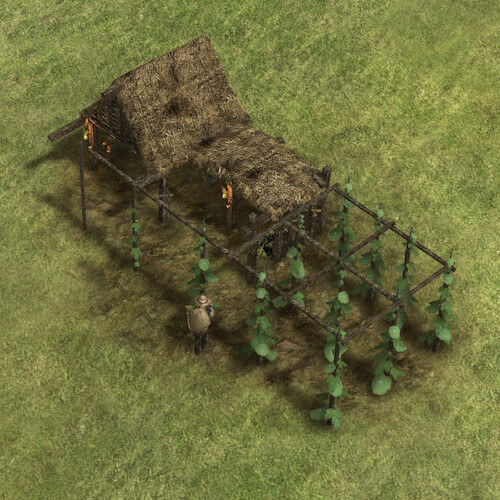
Cost: 25 wood
The hop farm grows varieties of bitter hops. Hop farms can be built on arable land. Hops are stored in the stockpile and used in the brewery to produce ale.
Mill
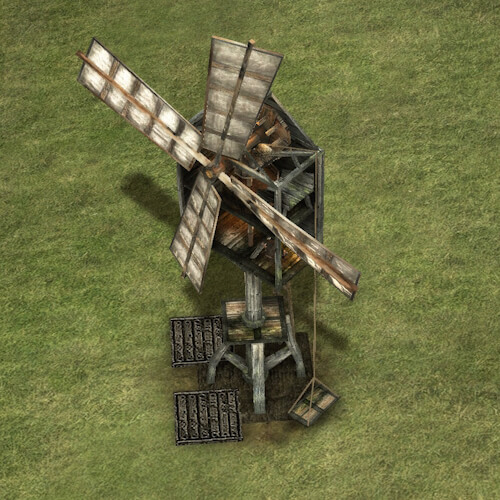
Cost: 50 wood
The mill uses wheat from the stockpile to make flour. Mills can be built on arable land. The bags of flour are stored in the stockpile, and are used to make bread at the bakery.A single mill should be able to cater for the needs of several bakeries and wheat farms.
Bakery
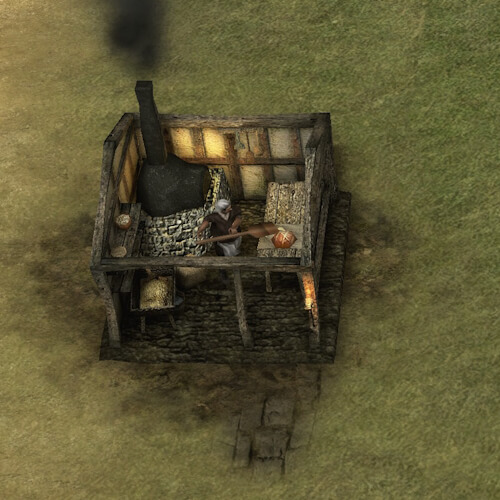
Cost: 50
The bakery uses flour from the stockpile to make bread. Bakeries can be built on arable land. Bread is stored at the granary and used to feed your peasants. Once production is working smoothly, bread is the most effective way to feed your people.
Brewery
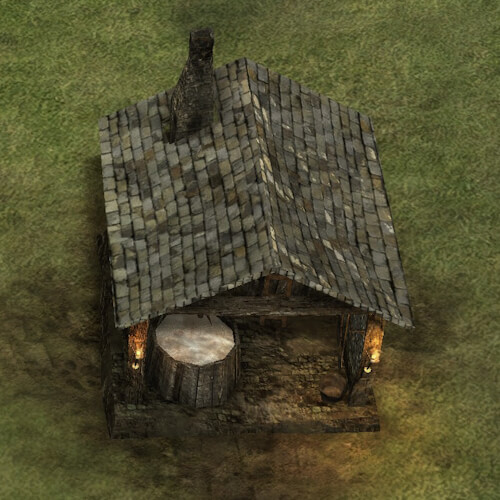
Cost: 50 wood
The brewery is where your hops are brewed into ale. The brewery can be built on arable land. Ale is stored in the stockpile. Ale is collected from the stockpile by the inn keeper and taken back to the inn, where the peasants like to go to enjoy a quiet drink or three.